

A Week to Drop My Cloudflare Bill from $6.44 to $5.92 — and Why the Money Saved Wasn't the Real Win
This isn’t a cost-cutting tutorial. It’s a retrospective on five projects sharing one template and falling into the same trap — and a meditation on where the real leverage lives when you’re trying to scale to dozens of projects.
The Setup
One weekday morning in early May I opened my Cloudflare billing inbox and saw this:
Invoice IN-64514070
Date of issue: May 7, 2026
Amount due: $6.44 USD
Not a lot of money. But the trend was the thing that put me on alert:
| Month | Total | of which CPU overage |
|---|---|---|
| March (first month) | $5.00 | $0.00 |
| April | $5.94 | $0.94 (46.2M ms overage) |
| May | $6.44 | $1.44 (72M ms overage) |
Month-over-month +56%. In absolute terms $1.44 is nothing, but I run several SaaS projects and plan to launch dozens of sites this year. At this growth rate the curve a year out is going to look ugly.
More importantly: I had no idea what was actually burning that CPU.
First Pass: Five Projects Split the Bill Evenly
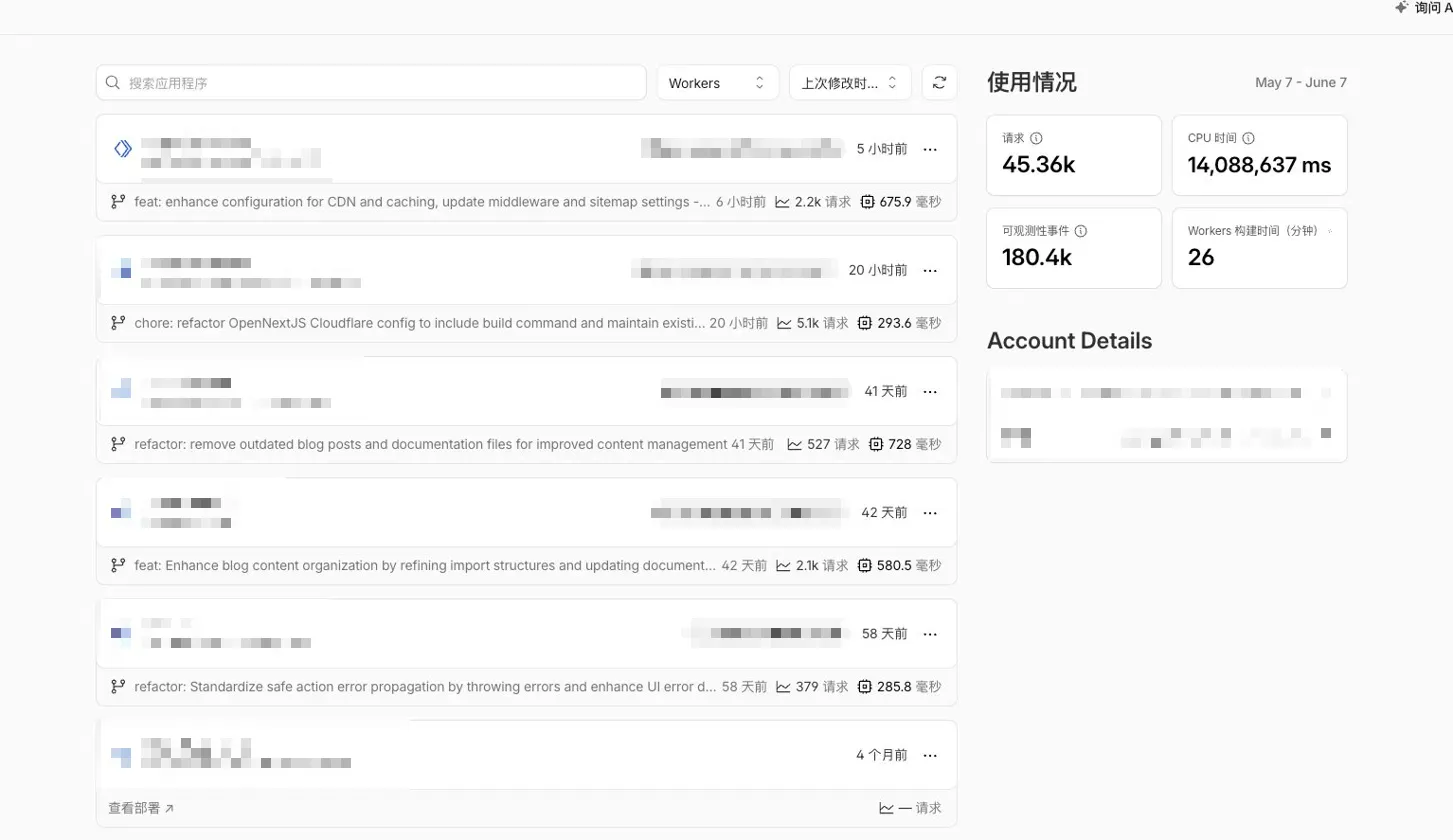
I opened the Workers dashboard. Five projects, last 24 hours:
| Project | Domain | Requests | CPU per req | Total CPU | Status |
|---|---|---|---|---|---|
| tomodachi-life | islebuddies.com | 2.2k | 675.9 ms | ~1.49M | Active |
| crimsondesert | crimsondeserthq.com | 5.0k | 293.6 ms | ~1.50M | Active |
| curve-rush-2 | curverush2.net | 2.1k | 580.5 ms | ~1.22M | Untouched 42 days |
| aimotiongen | aimotiongen.com | 527 | 728.0 ms | ~0.38M | Untouched 41 days |
| seo-os | seo.frency.me | 379 | 285.8 ms | ~0.11M | Untouched 58 days |
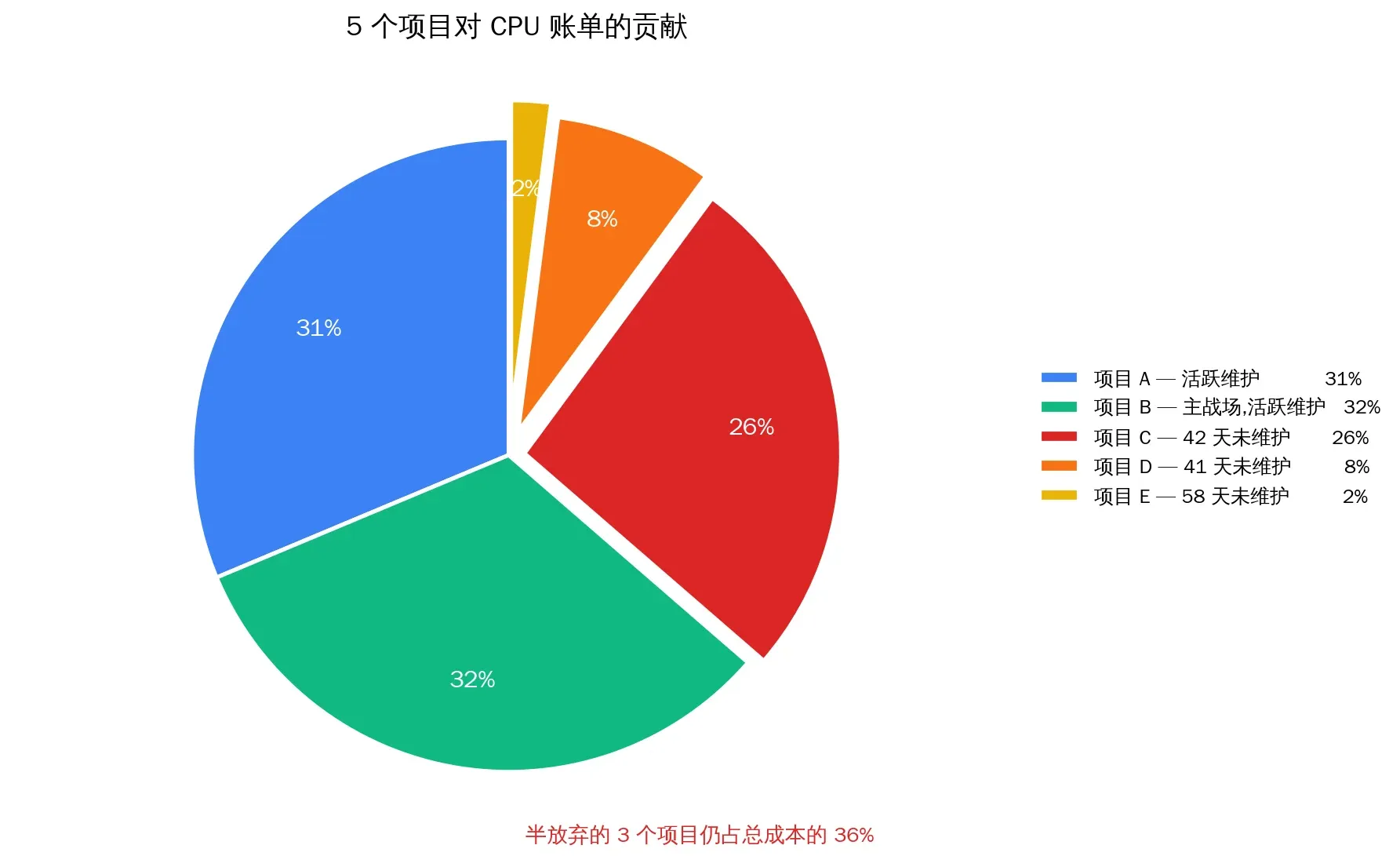
The top three projects split the bill almost evenly. That was the counter-intuitive part: you can’t just optimize “the one with the most traffic” — three projects contributed nearly equally, but the optimization paths were completely different:
- tomodachi-life had high per-request CPU → probably a heavy SSR path
- crimsondesert already had low per-request CPU → mostly request volume
- curve-rush-2 had middling CPU + 42 days unmaintained → the real question was “is this worth saving?”
Pivotal Moment: From Metrics to Root Cause
tomodachi-life’s P90 CPU was 1810 ms but the P50 was only 303 ms — a classic bimodal distribution, meaning some class of “heavy request” was pulling the mean up. I had Claude Code dig into the project and report back:
🔴 Root cause: open-next.config.ts has no R2 incremental cache enabled
   All marketing pages default to dynamic = 'auto' because they call
   getTranslations() inside, so Next treats them as dynamic — every
   request runs a full SSR pass.

🔴 H2: getRelatedGuidePosts scans all 45 blog posts on every request
🟠 H3: middleware has 9 console.log calls and recompiles a RegExp each time
🟠 H4: Chinese requests deepmerge a 240KB i18n JSON on every hit
I had Claude Code patch the config, deployed it, and… the metrics barely moved.
Trap #1: A Cache HIT Header Can Still Cost You Money
I wrote a quick bash script to curl each URL and inspect the real cache state:
URL="https://islebuddies.com/zh/guides/personality-types-guide"
for i in 1 2 3 4 5; do
  curl -sI "$URL" | grep -iE "cf-cache-status|x-nextjs-cache|age|cache-control"
done
The result made me rethink the whole problem:
Run 1: 6.31s  | cf=NA  nextjs=HIT  age=NA
Run 2: 0.81s  | cf=NA  nextjs=HIT  age=NA   ← occasionally fast
Run 3: 5.01s  | cf=NA  nextjs=HIT  age=NA
Run 4: 5.00s  | cf=NA  nextjs=HIT  age=NA
Run 5: 1.28s  | cf=NA  nextjs=HIT  age=NA

cache-control: s-maxage=2, stale-while-revalidate=2592000
cf-ray: ...-SIN
x-nextjs-cache: HIT looks like cache hits, but response times bounce between 1 and 6 seconds. Why?
Look closely at the headers:
cache-control: s-maxage=2— Cloudflare’s edge only caches for 2 secondscf-ray: ...-SIN— the request lands at the Singapore POP- R2 bucket is in the US
Meaning: every request hits the Worker, the Worker reads R2 across the Pacific, then returns the big HTML payload. HIT just means SSR rendering was skipped — the network round-trip was not.
This is a classic trap when optimizing black-box systems: a header saying “success” doesn’t mean you saved money.
Finding #2: One Template, Five Projects, Same Bug
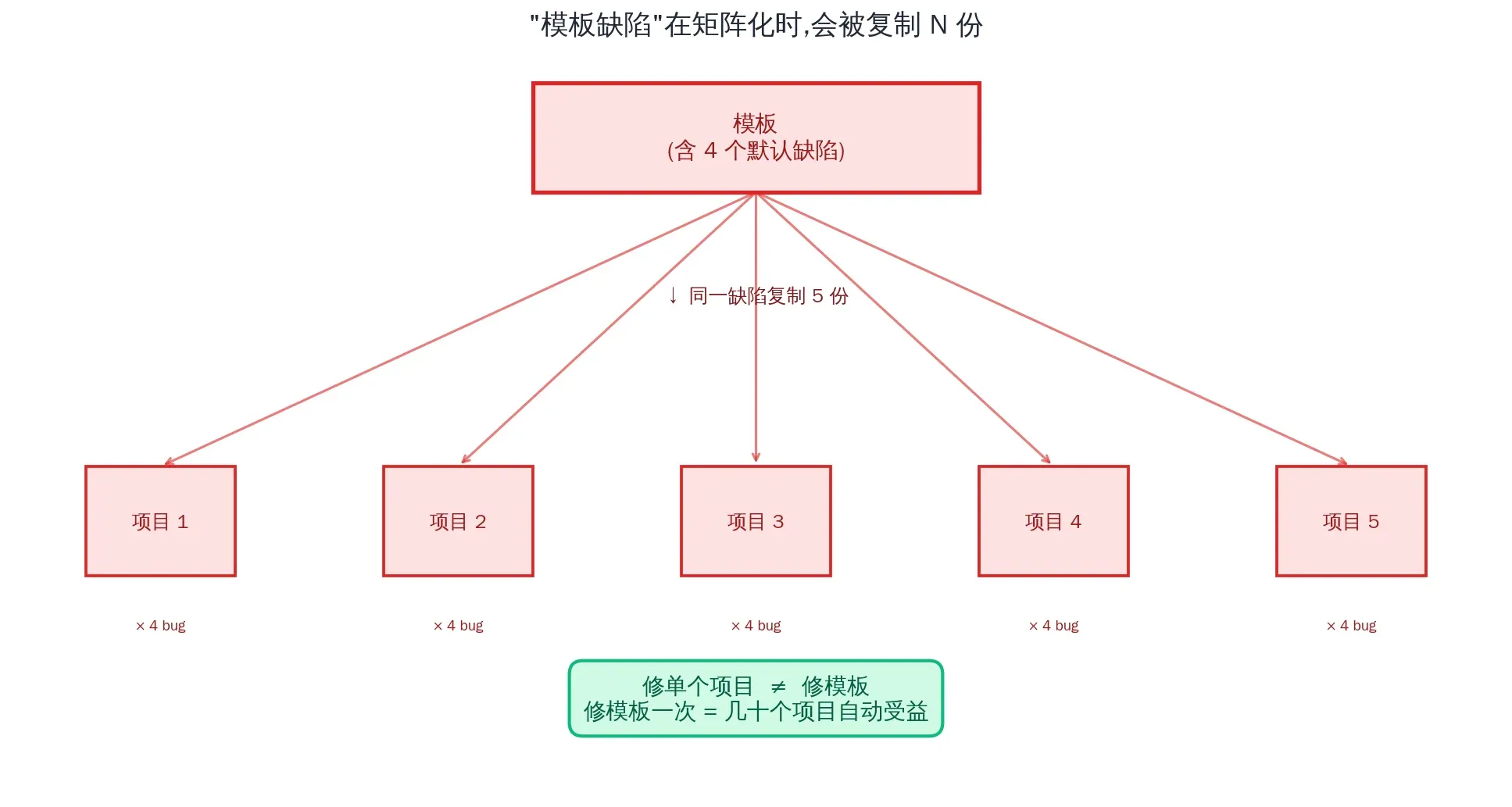
What really set off alarms was running verify-cache.sh against different URL patterns and finding a “failure-by-grouping” pattern:
✅ /zh/guides/personality-types-guide  → x-nextjs-cache: HIT
❌ /zh/guides                          → cache-control: no-store
❌ /zh                                 → cache-control: no-store
✅ /en/guides                          → no x-opennext header (pure static!)
✅ /en                                 → no x-opennext header
English: pure static (perfect). Chinese list pages: forced dynamic (disaster).
Same page template, but the behavior diverges entirely based on locale. This is a subtle interaction between next-intl’s localePrefix: 'as-needed' and the Next.js App Router — the default locale serves from the static path with no prefix, while non-default locales carry a prefix and hit the Worker.
And the kicker: all 5 projects were forked from the same mksaas template, so all 5 had this bug.
The Real Turning Point: Querying My Account via the Cloudflare API
I then connected the Cloudflare MCP connector to Claude and listed every config in my account via API:
Hyperdrive configs:
  - ai-motion-gen (used by aimotiongen)
  - seo-os (used by seo-os)

[end of list]
Only 2 Hyperdrive configs. But 4 of the 5 projects use the same template, and that template’s code says:
const sql = postgres(env.HYPERDRIVE.connectionString, ...)In other words, tomodachi-life and crimsondesert — the two most active projects — had no Hyperdrive binding at all. But the code was trying to use one.
Opened Observability logs, and there it was:
TypeError: Cannot read properties of undefined (reading 'connectionString')
GET /api/auth/get-session [error]
/api/auth/get-session is Better Auth’s automatic client-side polling endpoint — every visitor’s browser calls it on an interval, each call cold-starts the Worker → createAuth → throws TypeError → returns 500.
I stared at the error log for 30 seconds and realized: this endpoint is burning CPU on every real visitor, and I have never used the login feature.
Decision Time: Not All CPU Is Worth Saving
Two paths in front of me:
Path A: Configure Hyperdrive properly so Better Auth stops erroring — keep the option of using auth in the future. Path B: Just delete Better Auth, the (protected) route group, all the auth-related APIs — I’ve never used any of it.
I chose B. islebuddies.com is an SEO content site. I never expected anyone to sign up for it.
The more interesting case was curve-rush-2. It accounted for 26% of the bill, untouched for 42 days — the sitemap showed it was a 168-URL SEO content site about a game called “curve rush 2”. I asked Claude Code to scan for full-static migration feasibility:
Doable. All the blockers are mksaas scaffolding (auth/dashboard/payment) that this project doesn’t actually use. Delete those + change next.config to add
output: 'export'+ swap the search implementation, and you’ll produce 168 plain HTML files you can throw on Cloudflare Pages. Estimated effort: half a day to a day.
I read the report and… deleted the project.
The reasoning was simple: 42 days of neglect meant I’d already given up on it psychologically. The static migration alone was half a day’s work, and the marginal value of that half day — right now — was lower than starting a new experimental project. The domain money is spent; sunk cost stays sunk.
DNS detached, Worker deleted. 26% of the bill’s CPU gone instantly. Cleaner than any code I could have written.
Results
| Snapshot | CPU per req (tomodachi-life) | May bill projection |
|---|---|---|
| Before | 868.8 ms | $7–8 (at the prior growth rate) |
| After fix + project deletion | 542 ms (-38%) | $5.92 |
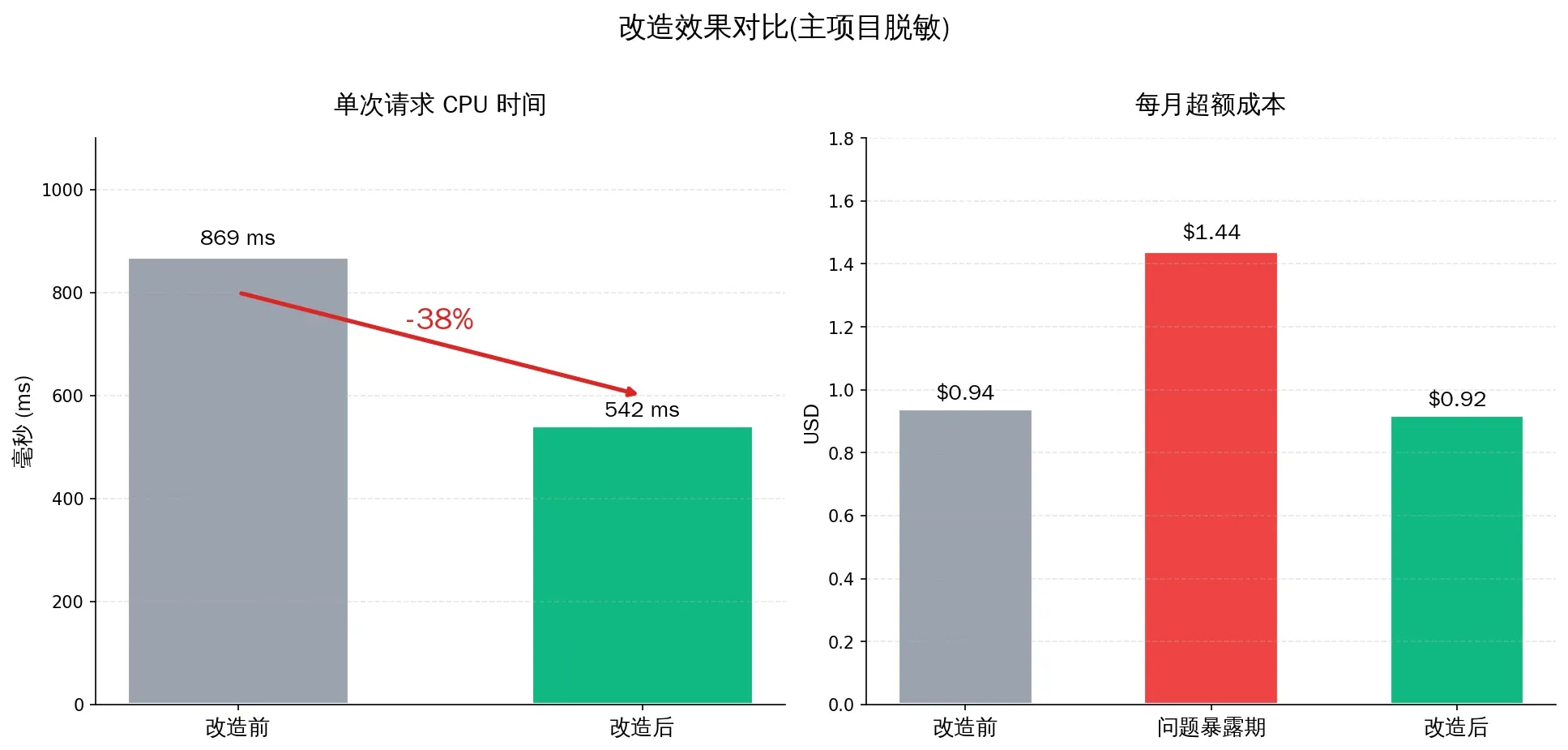
I have to be honest about one thing: the optimization gains got diluted by traffic growth. Over the same period total requests grew from 9k/day to 13k/day (+47%). Without the Better Auth TypeError cleanup, May’s bill would probably have been $7–8.
The Cheap Savings vs the Valuable Insight
If you only look at the bill, this exercise saved maybe $1–2. As an hourly-rate calculation it’s one of the worst trades in the world.
But the real output isn’t the $1 saved. It’s these:
1. Template fixes beat project fixes
I have 5 projects on the same mksaas template, all with the same 4 classes of bug:
- R2 incremental cache commented out by default
- middleware running console.log in production
- Better Auth assumes Hyperdrive exists
- localePrefix: ‘as-needed’ forces non-default locales to dynamic
These are template defects, not project bugs. The implication is that I should fork the template, apply every fix once, and start future projects from the fork. Fix once, dozens of projects automatically benefit — that’s the real leverage at scale.
2. The key to AI collaboration isn’t “writing code” — it’s “scanning projects”
Claude Code’s biggest value in this whole exercise wasn’t writing code for me. It was — given that I had no idea what was in any of these projects — pinpointing the exact file, exact line. For example:
🟠 H4 — deepmerge(en, zh) runs on every Chinese request
src/i18n/messages.ts:35-37: zh locale callsgetMessagesForLocale('zh')and full-deepmerges 121KB + 120KB of JSON every time.
File:line + precise data. I’d never opened that file, but Claude Code found it.
Later I connected the Cloudflare MCP connector and Claude directly queried my Hyperdrive / R2 / Workers configs via API — confirmed in seconds that 2 projects were missing Hyperdrive bindings. This kind of machine-assisted investigation is 100× faster than flipping through dashboards.
3. Deleting a project beats fixing it
curve-rush-2 was the biggest lesson here. I’d prepared half a day of prompts, a feasibility scan, a migration plan… and chose to delete instead.
Sunk cost is real, but it can’t be allowed to hijack future time. If you haven’t touched a project in 42 days, your body has probably already concluded its future value is low — your reasoning is just running late.
4. “Success in the headers” isn’t “money saved”
x-nextjs-cache: HIT plus s-maxage=2 looked like the cache was working, but the actual wall time was still 4–5 seconds. When optimizing black-box systems, there’s often a chasm between metrics and money. In the end you have to trust the bill — it’s the only feedback signal that doesn’t lie.
What’s Next
I’m pausing on CPU for now. $5.92 is fine — diminishing returns from here.
The higher-leverage things:
- Back-port these fixes into my mksaas-template fork so every future project starts healthy.
- Run the same cleanup on crimsondesert (same template → same disease, guaranteed).
- Keep watching the bill trend — the real effect of an optimization only becomes visible 30 days later.
If a year from now I have 30 projects and the bill stays in the $10–20 range, this retrospective’s real value will finally show up.
And if a year from now I only have 3 projects and the bill is $8 — then the biggest takeaway from this retrospective will be that it taught me, earlier than I would have learned otherwise: some projects shouldn’t be started, and some should be killed sooner.
Appendix: Technical cheat sheet
| Issue | File | Fix |
|---|---|---|
| R2 cache commented out | open-next.config.ts | Enable r2IncrementalCache |
| Better Auth errors | src/lib/auth.ts + missing Worker Hyperdrive | Delete the entire auth module |
| localePrefix dynamic | src/i18n/routing.ts | TBD — probably switch to 'always' |
| middleware console.log | src/middleware.ts | Enable removeConsole in next.config |
| Template’s auth/payment scaffolding | (protected)/, api/auth/, etc. | Delete it if you don’t use it |
Appendix: Useful tools
verify-cache.sh— bash script that auto-classifies a URL’s cache state (checkscf-cache-status/x-nextjs-cache/cache-control)- Cloudflare MCP connector — lets AI query your account config directly via API, 100× faster than the dashboard
- Cloudflare Observability — the Workers Logs page; see real error traffic